A Second Career After Racing: Injury, Recovery, and the Horse Who Was Given Another Chance

- 詳細內容
- 分類:靈芝與我
- 建立於 2026-08-16, 週日 00:24
- 點擊數:560
Not every racehorse gets a second chance after leaving the track. This is the story of one who did—an ordinary former racehorse carrying old injuries, and the years we spent rebuilding his health, trust, and strength. Ganoderma became part of that journey, but recovery ultimately meant more than returning to health. It meant discovering what kind of life could come next.
A few days ago, I came across a report about a racehorse that was euthanised after suffering an injury during competition. It reminded me of another article I had read the previous year, this one about the fate of retired racehorses in Australia. According to the report, approximately 300 horses were sent to slaughter in the space of just 22 days.
During their racing careers, those same horses had collectively earned nearly five million Australian dollars in prize money. As a horse owner, I understand some of the difficult realities behind these decisions.
The fate of retired racehorses
Racehorses are expensive to house, rehabilitate, and retrain, particularly when they can no longer compete. Understanding that reality, however, does not make it any easier to accept.
My own horse is an ordinary former racehorse—the kind found throughout Japan. Behind the spectacle and immense scale of Japan’s horse racing industry lies a far less visible reality. Every owner hopes to see their horse succeed, but competition has always produced winners and losers.
Few sporting environments demonstrate the principle of “winner takes all” as starkly as horse racing. Once a horse stops producing results, or loses the physical or psychological capacity to compete, its future can become uncertain very quickly.
Horses with valuable bloodlines may be retained for breeding or find new homes at riding clubs and farms. Some are successfully retrained for equestrian sport. Yet the number of horses offered these opportunities remains far below the number leaving the racing industry each year.
Retraining a racehorse as a riding or sport horse is not a simple process. The physical challenges alone can be considerable. Previous injuries must be assessed, an appropriate training load established, and the horse’s response to different types of exercise carefully monitored.
There is no universal rehabilitation program: what is suitable for one horse may be entirely wrong for another. Recovery is rarely a straight line, and being medically cleared does not necessarily mean that the body—or the mind—is ready to perform as it once did. Progress depends on time, appropriate conditioning, and the willingness to adjust expectations along the way.
For a retired racehorse, the psychological transition can be just as demanding. Not every horse receives consistent individual attention or comprehensive physical and emotional care during its racing career. Horses that have learned to respond defensively to pressure may be difficult to handle and slow to trust.
Retraining them requires patience and regular human contact, often over months or years. A horse considered difficult or unsafe is far less likely to be offered a second career. When the cost of rehabilitation exceeds the horse’s perceived economic value, euthanasia or slaughter may be treated as the most practical solution.
Without an exceptional pedigree, a successful racing record, or some other source of prestige, a horse can quickly lose the status it once held. An animal that was previously groomed, trained, transported, and watched by crowds may eventually be regarded only as livestock. Some retired racehorses enter the food and manufacturing supply chains, including those for horse meat and horse-oil products in Japan.
The horse I met
The horse I met had neither an outstanding pedigree nor an impressive racing record. He also carried injuries from his racing career. Taken together, those facts seemed to leave him with very few options. Nevertheless, in February 2017, he became the first horse I had ever owned.
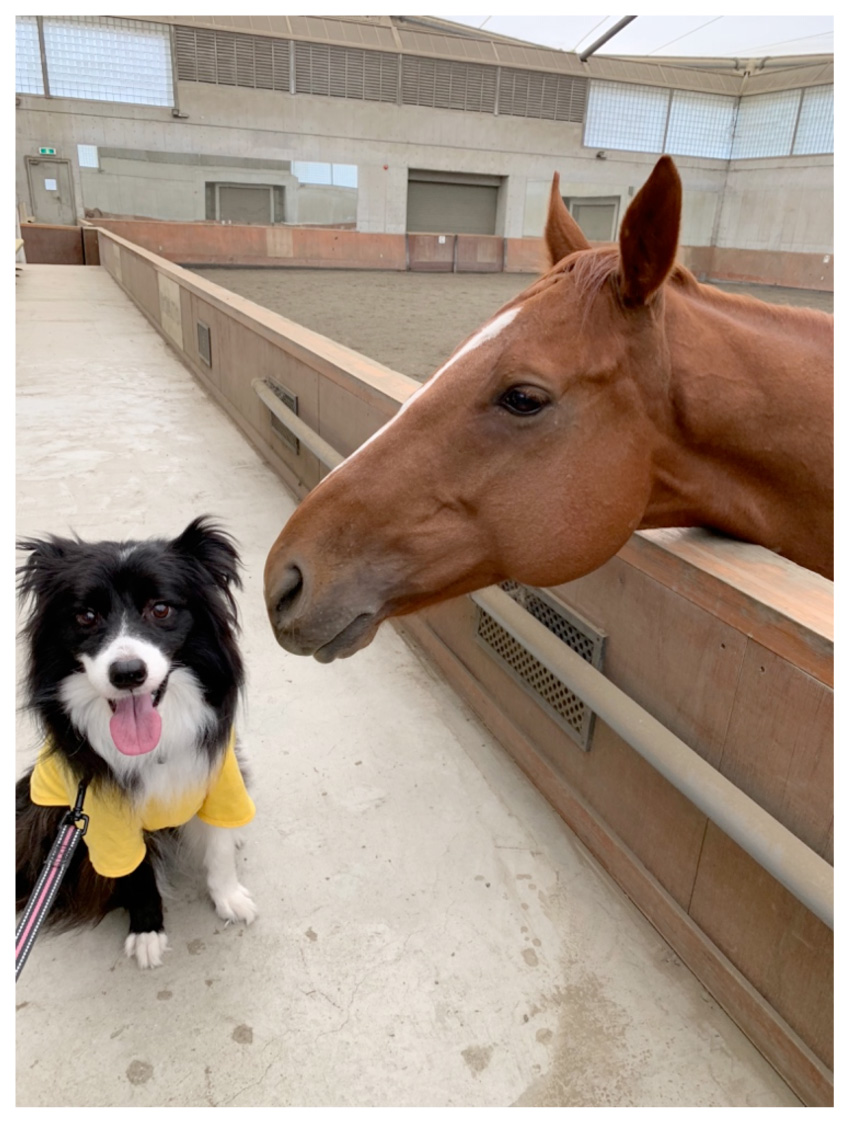
My horse and dog. Photo: Charlene Hseu
When I first saw him at close range, his coat was rough and untidy, and his body looked thin and fragile. It was difficult to imagine that only a few months earlier, in October 2016, he had still been competing on the racetrack. His initial blood test gave me another reason for concern. His white blood cell count was elevated, raising the possibility of inflammation or infection.
After his veterinary examination, I began considering what else I could do to support his general condition alongside proper veterinary care. That was when I decided to try adding Ganoderma (Ling-zhi) to his diet.
Can Ganoderma Restore His Health?
I had plenty of doubts in the beginning. A horse weighs many times more than a person, so determining a practical amount and finding a way to feed it consistently presented an immediate challenge. Ganoderma also has a distinctly bitter taste. I had difficulty tolerating it myself and had no reason to assume that a horse would be any more enthusiastic.
My first attempt involved mixing Ganoderma powder with brown sugar. Horses generally enjoy sweet foods, and sugar cubes are commonly used as rewards after exercise, so the idea seemed reasonable.
To my surprise, he accepted the mixture despite its bitterness. After trying it several times, he began to recognize the container. Before long, the sight of it was enough to make him ask for his serving. As someone who had disliked the taste of Ganoderma since childhood, I found his enthusiasm both unexpected and rather amusing.

Photo: Charlene Hseu
About five months after we introduced Ganoderma into his routine, a follow-up blood test showed that all of the measured values had returned to the normal range. By the time I wrote this account, we had been together for nearly three years. During that time, serious injuries and illness had fortunately played only a limited role in our life together.
His appearance had also changed considerably: he gained weight and muscle, his coat improved, and he gradually began to look less like a depleted former racehorse and more like an athlete preparing for a different discipline. The before-and-after photographs make that physical change easier to see than any description could.
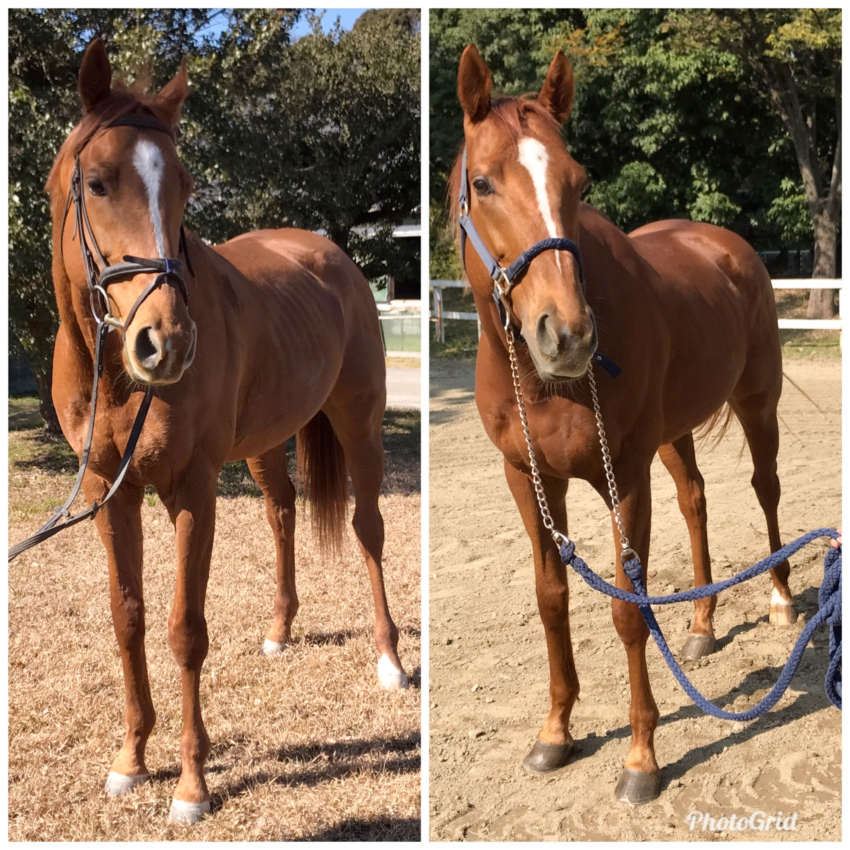
The before-and-after photographs make that physical change easier to see than any description could. Photo: Charlene Hseu
Can Ganoderma-derived Protein Help Heal His Wound?
I also found a Ganoderma-derived protein preparation useful in caring for the minor abrasions he occasionally sustained during exercise.
Small cuts and scrapes are difficult to avoid completely in active horses, but injuries to the lower limbs must always be taken seriously. A horse’s legs are essential not only to performance but also to its overall well-being. Pain and restricted movement can affect appetite, behavior, circulation, and digestive health; in severe cases, prolonged stress or inactivity may contribute to life-threatening complications.
On one occasion, I applied the preparation immediately after noticing a superficial injury to his leg. Over the following 24 hours, the bleeding, redness, and swelling subsided, and he continued to move comfortably without showing signs of distress. Other riders at the stable were surprised by how quickly the area appeared to settle.

Photo: Charlene Hseu
He found a different place to run
What stayed with me most during these years, however, was not a single blood test or wound. It was the horse’s willingness to work with people again.
Many of the physical and psychological injuries experienced by racehorses arise from the demands humans place upon them. Yet horses often respond to human inconsistency with a degree of patience that we have not necessarily earned.
My horse had every reason to be wary, but he continued to learn, adapt, and cooperate. The photograph accompanying this article was taken at the Hyogo New Year Equestrian Competition in Miki, Japan, on 13 January 2020.

Taken at the Hyogo New Year Equestrian Competition in Miki, Japan, on 13 January 2020. Photo: Charlene Hseu
By then, the thin and physically depleted horse I had first met had become a confident sport horse, competing in a completely different discipline. For anyone who has lived through a serious sporting injury, the significance of that transformation may be familiar.
Recovery does not always mean returning to exactly what came before. Sometimes the former career is over. The body may continue to carry the effects of an injury, and some limitations may never fully disappear. But an athletic life does not have to end simply because its first form is no longer possible.
For my horse, rehabilitation was not about recreating his racing career. It was about discovering what his body could still do, building strength without ignoring his history, and giving him enough time to understand a new kind of work.
Supporting that process—and watching him become healthy enough to compete again—has been one of the most meaningful experiences I have had as his owner.
He did not return to the racetrack.
He found a different place to run.
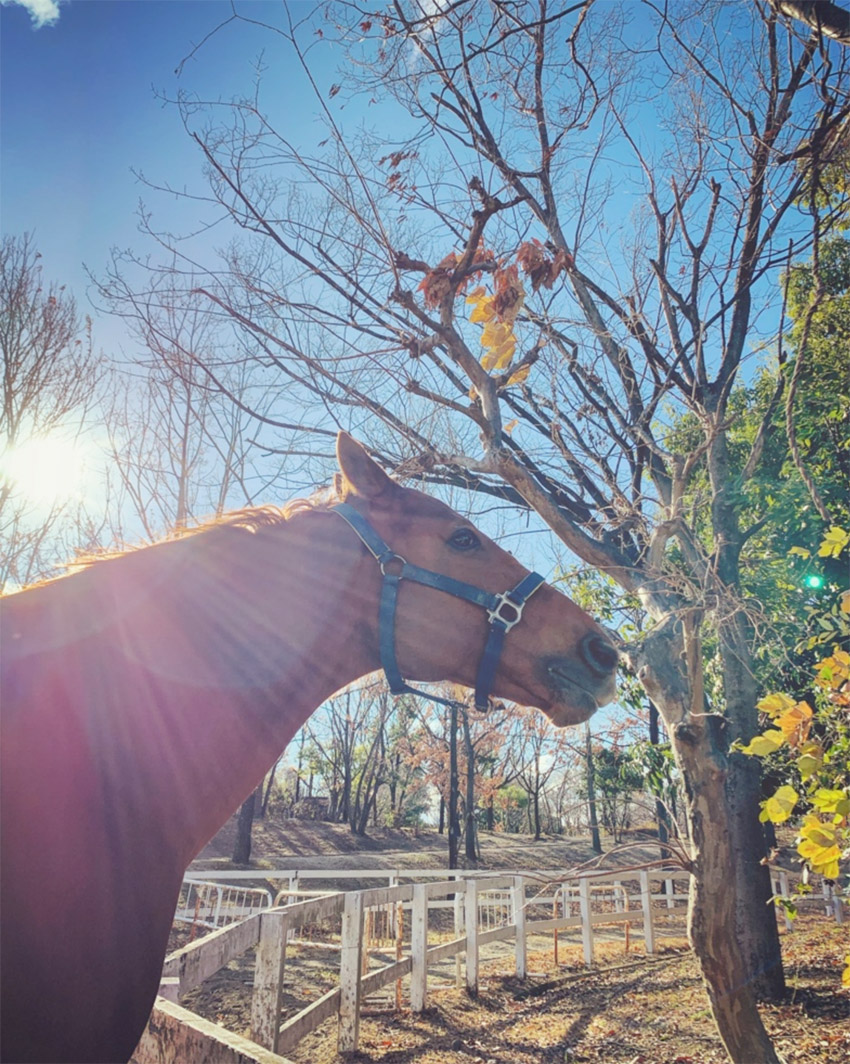
Photo: Charlene Hseu